When water is escaping, every minute matters. Knowing how to turn off your supply lets you stop the flow before a leak becomes serious damage. Most UK homes have more than one way to do this, and it is worth knowing them all before an emergency happens rather than learning on the night. This guide covers the internal stopcock, the external stop valve, isolation valves on individual fittings, and what to try if a valve is stuck.
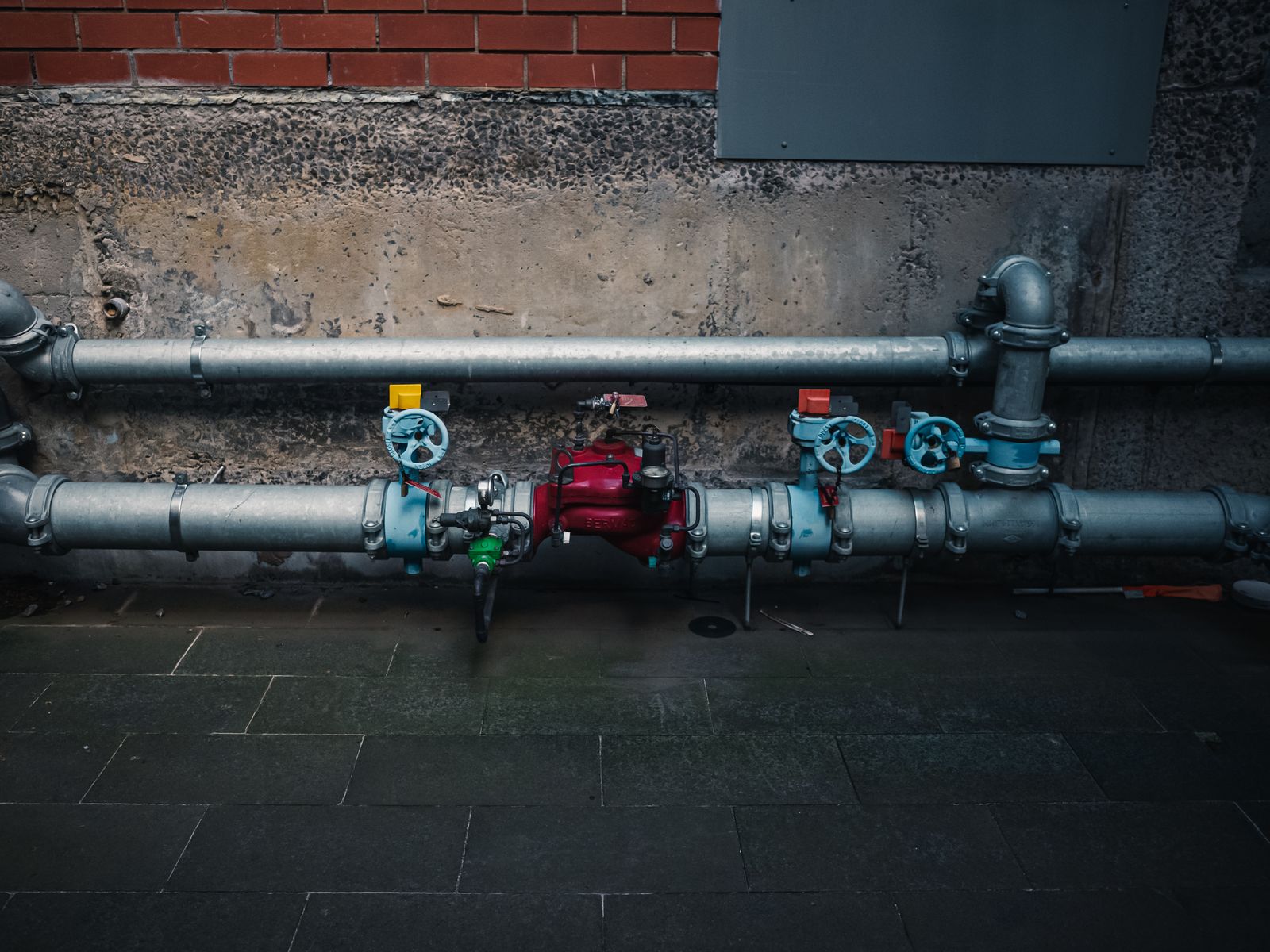
The internal stopcock
The internal stopcock (also called a stop tap or stopcock valve) is the main control for the cold water entering your home. It sits on the pipe where the mains supply comes into the property. In most UK homes it is under the kitchen sink, but it can also be in a downstairs cloakroom, a utility room, an airing cupboard, a cellar, or near the front door where the pipe enters. If you are not certain where yours is, read our guide on how to find your stopcock, which lists the usual spots and how to recognise it.
How to turn it off
A stopcock looks like a small brass or chrome valve with a round or lever handle on the pipe. To close it, turn the handle clockwise, the familiar “righty-tighty” direction, until it stops. Do not force it past the natural stopping point. Once closed, run a cold tap: the flow should slow to a stop within a short time, confirming the supply is off. To turn the water back on, turn the handle anticlockwise, slowly, so the pipes refill gently rather than with a sudden surge.
Stay safe around water and electrics
If a leak has reached electrical fittings or the fuse board, switch off the electricity at the consumer unit before dealing with the water, but only if the unit is dry and you can reach it without standing in water. If you smell gas at any point, leave the property and call the National Gas Emergency Service on 0800 111 999.
The external stop valve
As well as the internal stopcock, there is usually an external stop valve (sometimes called the boundary or outside stopcock) where the supply pipe enters your property from the water main. It is often under a small round or square cover in the pavement, path or front garden, sometimes at the bottom of a narrow vertical chamber. Lifting the cover and reaching down, you may be able to turn the valve by hand or with a long stopcock key. This is the one to use if your internal stopcock fails or if the leak is on the pipe before it reaches the house. Because this valve can also control the supply to neighbouring properties in some cases, take care and, if unsure, contact your water supplier.
Isolation valves on individual fittings
You do not always need to shut off the whole house. Many taps, toilets, showers and appliances have a small isolation valve on the pipe feeding them, a brass fitting with a slot you turn a quarter turn with a flat screwdriver. Turning the slot so it lies across the pipe shuts off that fitting only, leaving the rest of the house in supply. This is handy for a dripping tap or a running toilet while you arrange a repair such as emergency tap repairs, without leaving the whole home without water.
If the stopcock is seized
Stopcocks that are rarely used can seize up, so the one time you need it, it will not budge. Do not apply so much force that you risk snapping the valve or the pipe, which turns one problem into two. If it is slightly stiff, gentle, steady pressure sometimes frees it. If it will not move, use the external stop valve instead, or isolation valves on the leaking fitting, and then have the stopcock looked at. A stiff, leaking or non-sealing stopcock is a common fault we put right with a stopcock repair or replacement. It is also one of the first things a plumber checks when attending burst pipe repairs, because a working shut-off makes every future emergency easier to handle.
After you have turned the water off
Once the supply is off, open the cold taps to drain the pipes and reduce pressure at the leak, then arrange a repair. If you cannot find where the water is coming from, our page on emergency water leak repairs explains how a leak is traced and fixed. And for the future, test your stopcock a couple of times a year by closing and opening it so it stays free. A seized valve discovered during a flood is the worst possible moment to find out.
This guide offers general information for UK households and is not a substitute for professional advice. If you are unsure or the situation is unsafe, stop and contact us for help.